Operations Depend on Individuals
Decision criteria and exception handling reside with individual staff, putting quality and continuity at risk whenever employees transfer or leave.

MANAGED IT SERVICES FOR MANUFACTURING
We safely take over large, multisite IT environments and provide integrated support from the service desk to specialist operations and service oversight. We eliminate dependence on individual staff and advance standardization, automation, and optimization in stages.
MANUFACTURING IT CHALLENGES
As systems, sites, and vendors multiply, day-to-day responses increasingly depend on individual experience, leaving less time for improvement.
Decision criteria and exception handling reside with individual staff, putting quality and continuity at risk whenever employees transfer or leave.
Configurations, contracts, procedures, and response histories are scattered, making costs, risks, and dependencies between systems difficult to see.
Inquiries and incidents consume the time needed for standardization, automation, and stronger security.
OUR APPROACH
Rather than starting with advanced automation, we make the current state visible and use standardization as the foundation for gradually improving operational maturity.
Inventory activities, systems, and the operating model to identify risks and prioritize improvements.
Establish procedures, roles, SLAs, and decision criteria to move toward operations that do not depend on individual staff.
Streamline monitoring, notifications, and routine processing so staff can focus on decisions and improvements.
Analyze operational data and regularly reassess the balance of quality, cost, and risk.
SERVICE SCOPE
We manage multiple technology domains and vendors through a single operating model for users and IT environments in Japan and overseas.
Centralized inquiry intake, initial triage, and prompt resolution using knowledge resources.
Monitoring and change support for cloud, network, security, identity, and devices.
Drive improvements across quality, problems, changes, costs, and risks.
PROACTIVE IT OPERATIONS
Daily inquiries, incidents, changes, and monitoring generate insights for improvement. Advange analyzes operational data and turns those insights into concrete actions.
Resolve Incidents
Analyze causes and prevent recurrence
Repeat Routine Tasks
Automate tasks and shift effort to improvement
Monitor System Status
Anticipate performance degradation and risks
Report Results
Inform improvement proposals and IT investment decisions
PHASED SERVICE TRANSITION
We clarify the scope and responsibilities, provide training using actual cases, and run a period of parallel operations before going live. We also document knowledge that previously depended on individual experience.
Review the activities in scope, documentation, access rights, stakeholders, and current issues.
Transfer processes, decision criteria, and exception handling.
Use real cases to check understanding and identify gaps in procedures.
Verify quality, roles, and escalation procedures.
Move to regular reviews and improvements once operations are stable.
Answers to common questions about large, multisite IT infrastructure operations, operational handovers, and continuous improvement.
Yes. We can define the scope around your current needs and start in stages, covering the service desk, specialist operations such as cloud, network, and security, or service oversight and improvement.
The scope can include cloud infrastructure such as Azure, AWS, and Microsoft 365; WAN, LAN, and remote access; endpoints, SASE, identity, logs, and vulnerabilities; and end-user environments including PCs and accounts.
We clarify the scope and division of responsibilities, then transition in stages through preparation and assessment, knowledge transfer, hands-on training, parallel operation, and live operations and improvement. We verify quality and escalation procedures using real cases to limit the impact on operations.
Yes. We document activities, systems, and the operating model, then standardize procedures, roles, SLAs, and decision criteria. We automate monitoring, notifications, and routine processing where appropriate and analyze operational data to improve quality, cost, and risk management continuously.
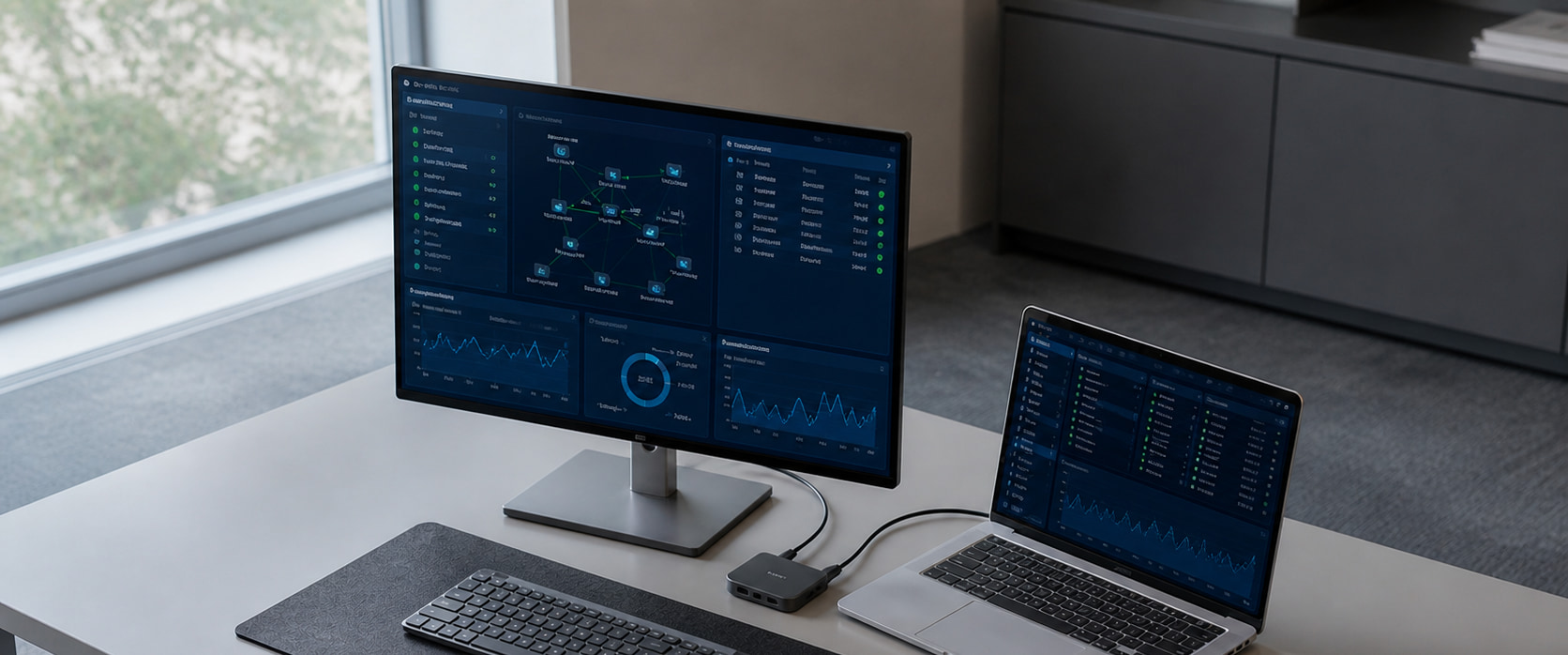
We tailor the service scope to your needs, from current-state assessment and operational transition to 24/7 support, standardization, and automation.