
 Webinar
For enterprise buyers, these developments raise a practical question. What must the facility, hardware supplier and deployment team confirm before equipment arrives?
Liquid cooling moves further into deployment planning
In August 2026, Singapore launched SS 726:2026, a standard intended to help data centres adopt liquid cooling in tropical climates. Developed jointly by IMDA and Enterprise Singapore through the Singapore Standards Council, it addresses the growing demands associated with AI workloads.For project teams, the announcement provides a reason to review cooling requirements while selecting equipment. A server’s cooling specification needs to match what the intended site can supply and maintain.
A readiness workshop should bring the server supplier and facility operator together to review the proposed configuration. Where liquid cooling is involved, the discussion should cover the required supply conditions, coolant compatibility, pipe connections, leak detection and maintenance access. Record who will verify each requirement and which supporting documents are still needed.
Confirm usable power at the rack
Power availability also remains an industry concern. In an October 2026 parliamentary reply, Singapore’s Ministry of Energy, Trade and Industry addressed the additional electricity and water demand associated with AI computing and data centre growth. The reply stated that applicants in the second Data Centre–Call for Application exercise were required to power at least 50% of their data centre capacity from green energy sources.That requirement applies to the stated allocation exercise. For an enterprise deployment, the immediate task is to establish the power available to its own equipment.
Ask the supplier for whole-system input requirements for the selected configuration. The facility team can then check the proposed rack allocation, power distribution and resilience arrangements. Record how much capacity remains available for expansion and what happens to the supported load during planned maintenance or a power-path failure.
Turn the workshop into a deployment decision
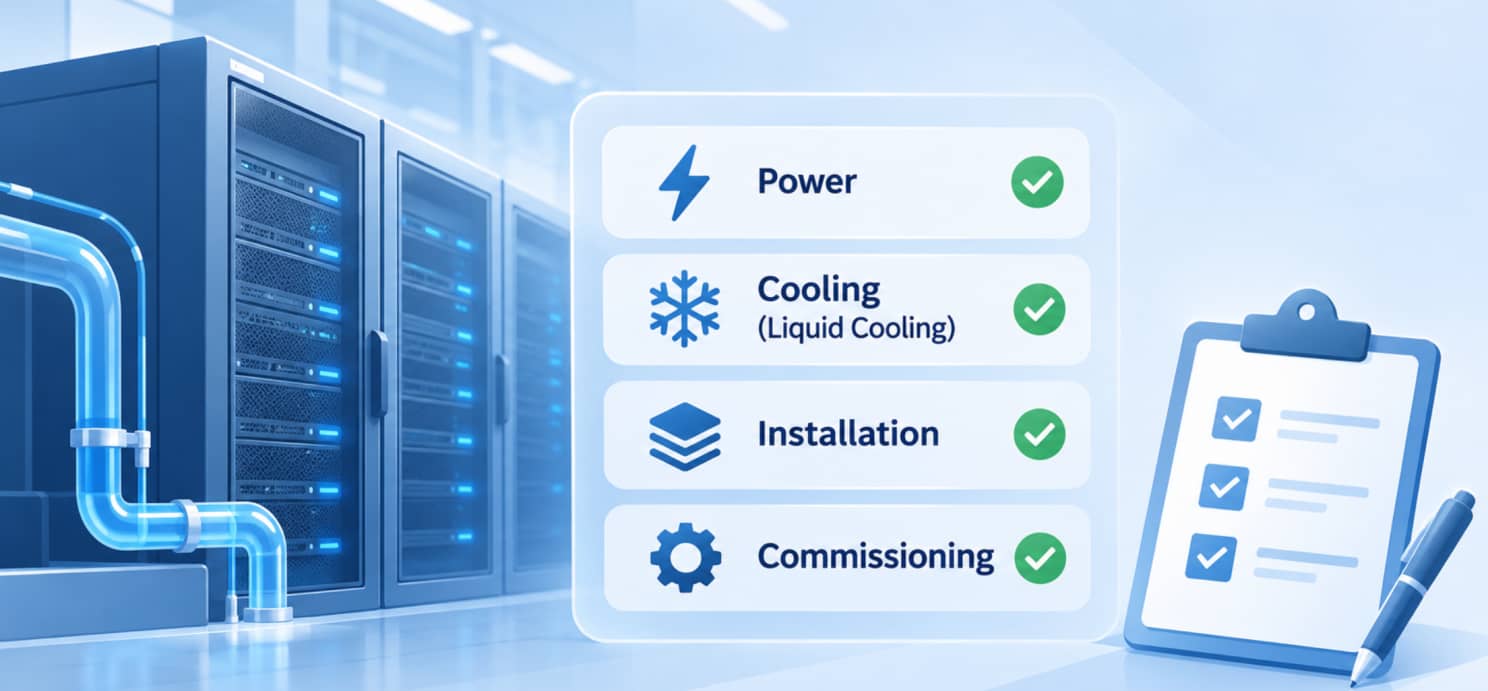
The workshop should leave procurement and technical teams with a record they can use to resolve outstanding issues.| Review area | Evidence to bring | Decision to record |
| Power | Server input requirements, rack allocation and distribution design | Whether the site can support the proposed configuration and resilience requirements |
| Cooling | Supplier cooling specifications and facility operating conditions | Compatibility, required modifications and maintenance responsibilities |
| Installation | Equipment dimensions, weight, rack layout and delivery route | Access arrangements, handling requirements and installation sequence |
| Commissioning | Proposed test workload, monitoring points and acceptance criteria | Who conducts each test and who approves readiness for use |
| Expansion | Expected additional equipment and associated site requirements | Available headroom, dependencies and the next review point |
Separate confirmed information from estimates. If cooling compatibility is awaiting supplier confirmation, assign an owner and a deadline before installation is committed. If an expansion requires electrical work, include that work in the programme and budget.
Connect facility readiness with the application workload
A facility check also needs the workload assumptions behind the purchase. The application team should identify the intended models, expected demand and performance targets. Those assumptions help the supplier explain the proposed hardware configuration and give commissioning teams a representative workload to test.
For a readiness discussion with Advange, bring the proposed server configuration, facility specifications, rack layout and intended deployment schedule. Use the session to agree the checks, resolve gaps between suppliers and establish the relevant planning, acceptance and operational scope.
The deployment decision should rest on documented power availability, compatible cooling and agreed commissioning results. Bringing those requirements together before delivery gives the customer a clearer route from an equipment order to operational AI infrastructure.
References
1. Enterprise Singapore. Singapore launches world’s first liquid cooling standard for data centres in tropical climates. August 2026.
2. Ministry of Energy, Trade and Industry, Singapore. Written reply on electricity and water demand arising from AI computing and data centre growth. 7 October 2026.