
Free cookie consent management tool by TermsFeed Generator

About Us: Who We Are, Our Values &Asia-Pacific Footprint

Major Southeast Asian Retailer

One Point of Contact for IT Support Across 46 Stores in Seven Overseas Regions 

We provide centralized IT support for 46 stores across seven regions, covering sales data integration, store equipment, and daily monitoring in three languages, 365 days a year.

  • Overseas Locations
  • Major Retailer

Company

Company Overview

Major Southeast Asian Retailer

The customer's name is confidential. This case study is based on service materials current as of February 2026.

Target
Asia and Guam: Seven overseas regions and 46 stores
Support Areas
IT Support Center Operations
Operational structure
Unified support for overseas stores / available 365 days a year
Supported languages
English, Japanese, Chinese

Highlights

Case Highlights

A multilingual team of approximately 180 delivers consistent, 24/7 operational support across Japan and other markets.

Three support tiers work together, from the service desk to specialist operations and service management.

Building on 15 years of stable operations, we use operational data to support standardization, automation, and continuous improvement.

Case Details

Case Details

Explore the project background, operations model, continuous improvements, and results.

As overseas stores expand, fragmented IT support puts sales opportunities at risk.

Each store uses a range of equipment, including POS and payment terminals, self-checkout systems, and store servers. Sales data flows from stores to regional offices and servers in Japan. With equipment configurations, operating practices, languages, and communication channels differing by region, the customer needed a common point of contact to quickly identify incidents and data inconsistencies and minimize the impact on sales.
Keep sales data flowing: Monitor data integration from store terminals to servers in Japan, and address inconsistencies and transmission errors.

Support equipment across the store: Provide one contact point for equipment needed to operate stores, including POS systems, payment terminals, printers, UPS units, and networks.

Accommodate regional differences: Document differences in languages, store formats, configurations, and communication channels across 7 regions to create a common support process.

Three Support Tiers Connect Store Enquiries with Specialist Assistance

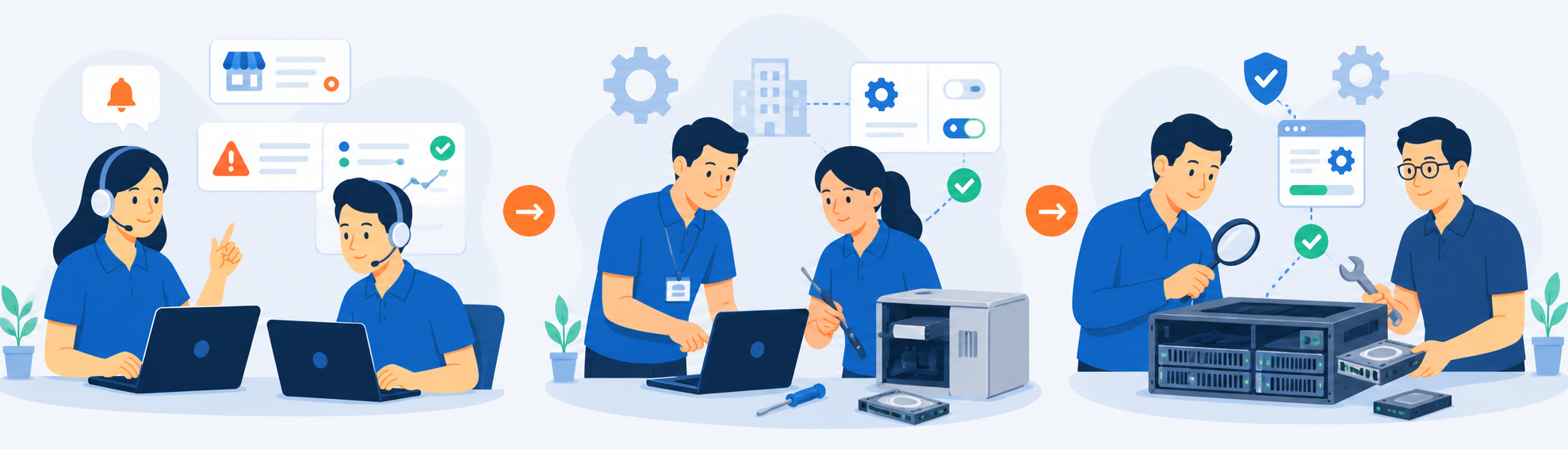
Advange Support Central serves as the first point of contact, handling intake, status checks, initial investigation, and daily monitoring. Cases are escalated to IT departments in Japan or locally, or to product and equipment vendors, according to defined criteria and the nature of the issue.

Advange Support Central: Receives store inquiries, incident reports, and system alerts, and performs initial investigation and first-line resolution.

IT Departments in Japan and Local Markets: Application changes and equipment faults related to each local environment.

Product and Equipment Vendors: Provide specialist assistance, including product-specific fault investigation, software changes, and equipment replacement.

Support is available 365 days a year in English, Japanese, and Chinese through Microsoft Teams, email, and communication channels suited to each region.
 
 
Key Support Areas Covering the IT Needed for Store Operations

Retail Applications and Sales Data Integration


Support for Microsoft Dynamics NAV / LS Retail usage, data inconsistencies, uploads and downloads, and synchronization failures.

Store Hardware

Incident intake and replacement coordination for POS systems, payment terminals, self-checkout systems, store servers, printers, UPS units, CCTV, and other equipment.

Daily Checks and Monitoring

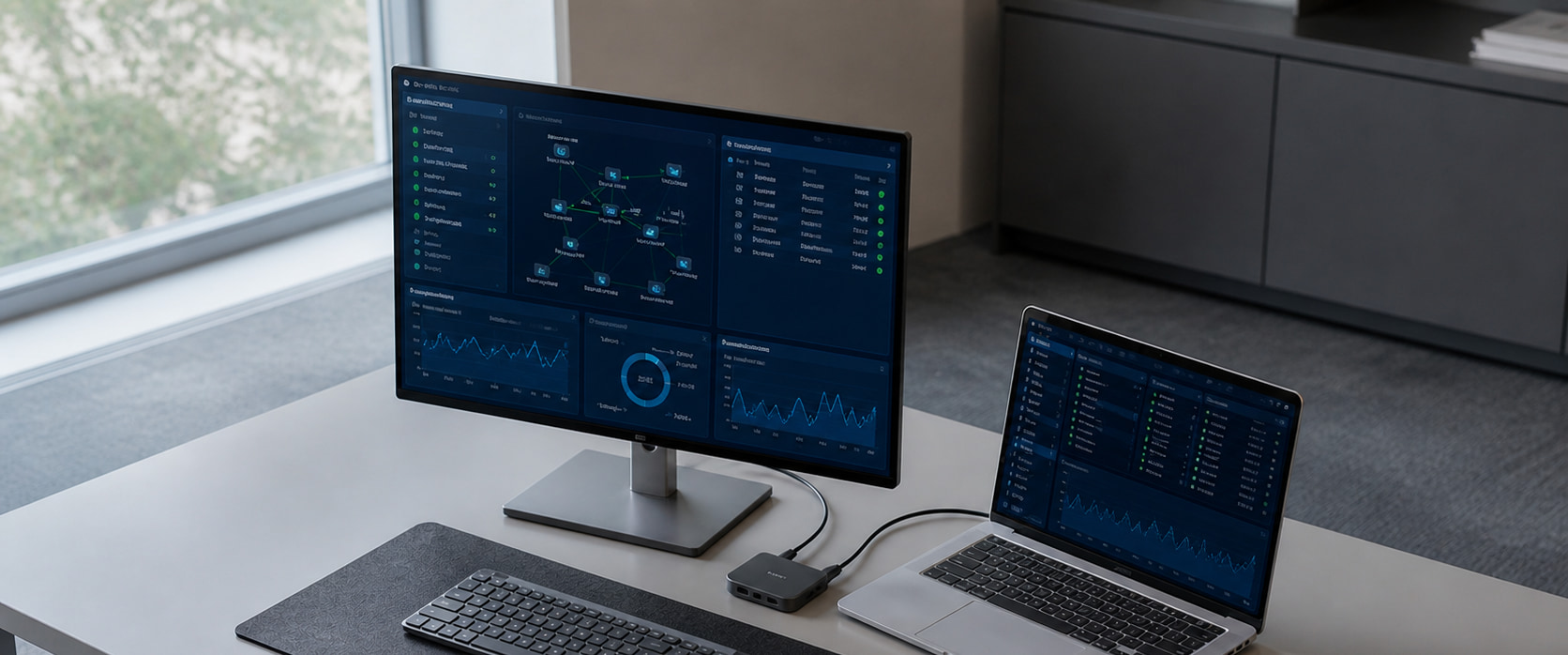
Checks of servers, logs, data synchronization, CPUs, memory, networks, and more using Zabbix, Grafana, and other tools.

Turning individual experience into knowledge the whole team can apply.

We document differences between regions and stores, along with complex data integrations, and consolidate error messages, screens to check, response procedures, and related tickets into knowledge articles. Weekly ticket reviews and training expand the range of issues that can be resolved at the first point of contact.

Standardization: Document supported equipment, data flows, integration conditions, and escalation contacts
Knowledge documentation: Create clear, actionable procedures for each screen and error
Review and improvement: Continuously apply findings to ticket analysis, FAQs, automation, and training
Examples of Improvements Expanded operating procedures from 19 to 81

Clearer Escalation Criteria

Listed issues, owners, contacts, and decision criteria to shorten handoffs from L1 to L2 and L3.

Phased Training and Quality Checks

Combined classroom instruction, self-study, shadowing, hands-on support, and reassessment to develop staff with broader skills.

Routine Task Automation and FAQ Development

Advanced automation of repetitive tasks and publication of user FAQs to reduce inquiries and encourage self-service resolution.

Creating the next success story
with your business

Your initial assessment is free. We will propose an IT operations model tailored to your industry, scale, and challenges.

Free consultation and quote

We will contact you promptly.

The information you submit will be used only to respond to your enquiry and will not be disclosed to third parties except as described in our Privacy Policy.

Your message has been sent.

Thank you for your enquiry. We will contact you promptly.